WHAT THE RESEARCH IS SHOWING
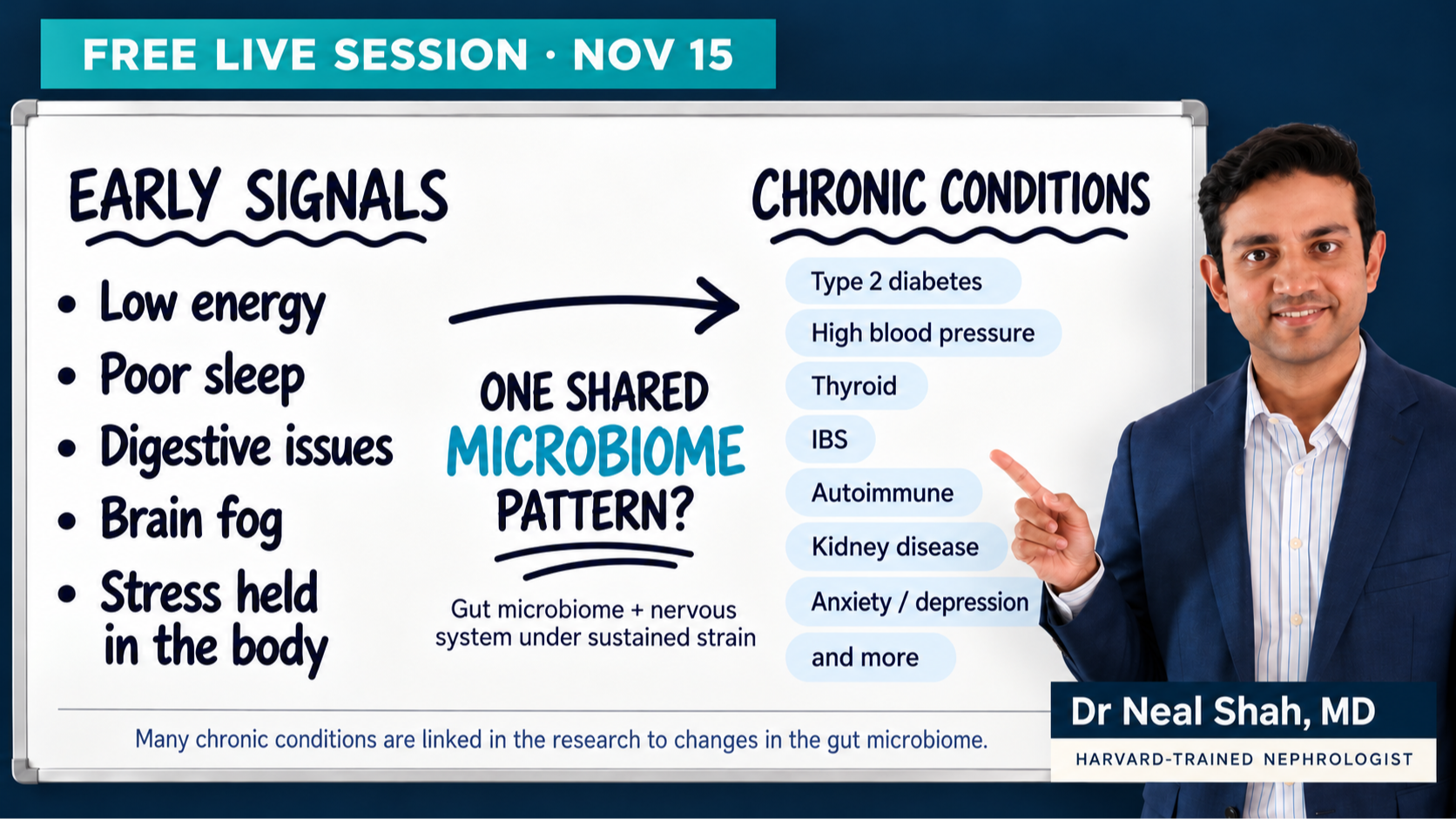
Different diagnoses. One pattern underneath?
Find the condition closest to yours, or to someone you care about, and the early signals many people notice alongside it.
These studies show links, not cause and effect.
Type 2 diabetes
In more than 5,500 adults followed for 16 years, gut bacteria helped predict who developed type 2 diabetes.
Often noticed alongside it: crashing by mid morning, leaning on coffee or sugar, waking at 2 or 3 AM.
Ruuskanen et al., Diabetes Care, 2022
High blood pressure
Across pooled studies, people with high blood pressure consistently had fewer protective, butyrate-making gut bacteria.
Often noticed alongside it: jaw clenching, tight neck and shoulders, headaches or heaviness in the head.
Cai et al., Journal of Clinical Hypertension, 2023
Anxiety and low mood
In more than 2,500 adults, more depressive symptoms went with less diverse gut bacteria. In another study, a nervous system stuck in stress (lower vagal tone) was linked with a different gut mix.
Often noticed alongside it: easily triggered, a pit in the stomach before stressful moments, craving sweet or salty food under stress.
Radjabzadeh et al., Nature Communications, 2022. Ravenda et al., Scientific Reports, 2025
IBS and gut trouble
Across 23 studies and 1,340 adults, people with IBS had fewer protective gut bacteria. IBS is now classified as a disorder of gut-brain interaction.
Often noticed alongside it: bloating that builds through the day, cramps, urgency that's hard to control, foods you used to handle now causing trouble.
Wang et al., Journal of the Academy of Nutrition and Dietetics, 2020
Fatty liver
A gut bacteria signature, measured before any disease, predicted who developed fatty liver about 4 to 5 years later, better than standard risk models.
Often noticed alongside it: tired after meals, afternoon sugar cravings, brain fog.
Leung et al., Science Translational Medicine, 2022
Hashimoto and thyroid
Across 16 studies, people with autoimmune thyroid disease had a different gut bacteria mix than healthy people.
Often noticed alongside it: tired even after sleep, foggy, often forgetting words or names, low mood.
Alkader et al., Frontiers in Endocrinology, 2023
Rheumatoid arthritis and joint pain
Across 92 studies and nearly 12,000 people, rheumatoid arthritis was linked with lower gut diversity and fewer anti-inflammatory bacteria.
Often noticed alongside it: waking up tired after a full night, neck and shoulder tension running into the back, worn out by early afternoon.
Wang et al., EBioMedicine, 2022
Migraine and headaches
In a small study of 130 people, gut bacteria differed between people with and without migraine, and between occasional and chronic migraine.
Often noticed alongside it: heaviness in the head, jaw clenching, neck tension, feeling overloaded by noise or people.
Yong et al., Scientific Reports, 2023
Kidney disease
A review of 69 studies found less diverse gut bacteria in chronic kidney disease, even at early stages.
Often noticed alongside it: waking through the night, not feeling fresh after sleep.
Voroneanu et al., Journal of Clinical Medicine, 2023
THE EARLY SIGNALS
The four you know, plus one most people miss
Many people notice these long before a diagnosis. My read is that when several show up together, they are one pattern, not separate problems.
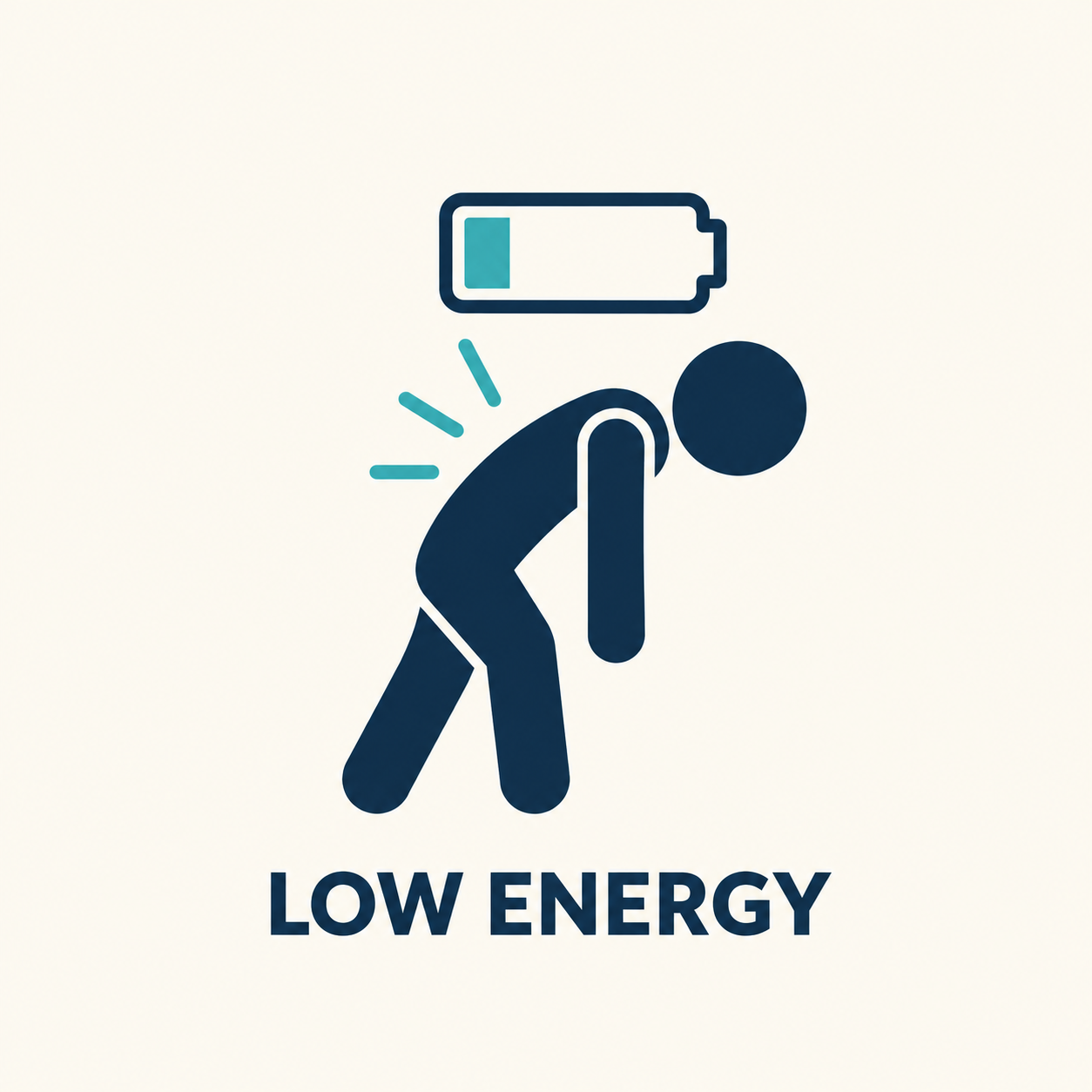
1. Low energy
- Exhausted by mid morning or early afternoon
- Leaning on coffee, sugar or energy drinks to get through the day
- Tired or excessively sleepy after meals
- Waking up tired or unrested after a full night's sleep
- Less available for family or loved ones by evening
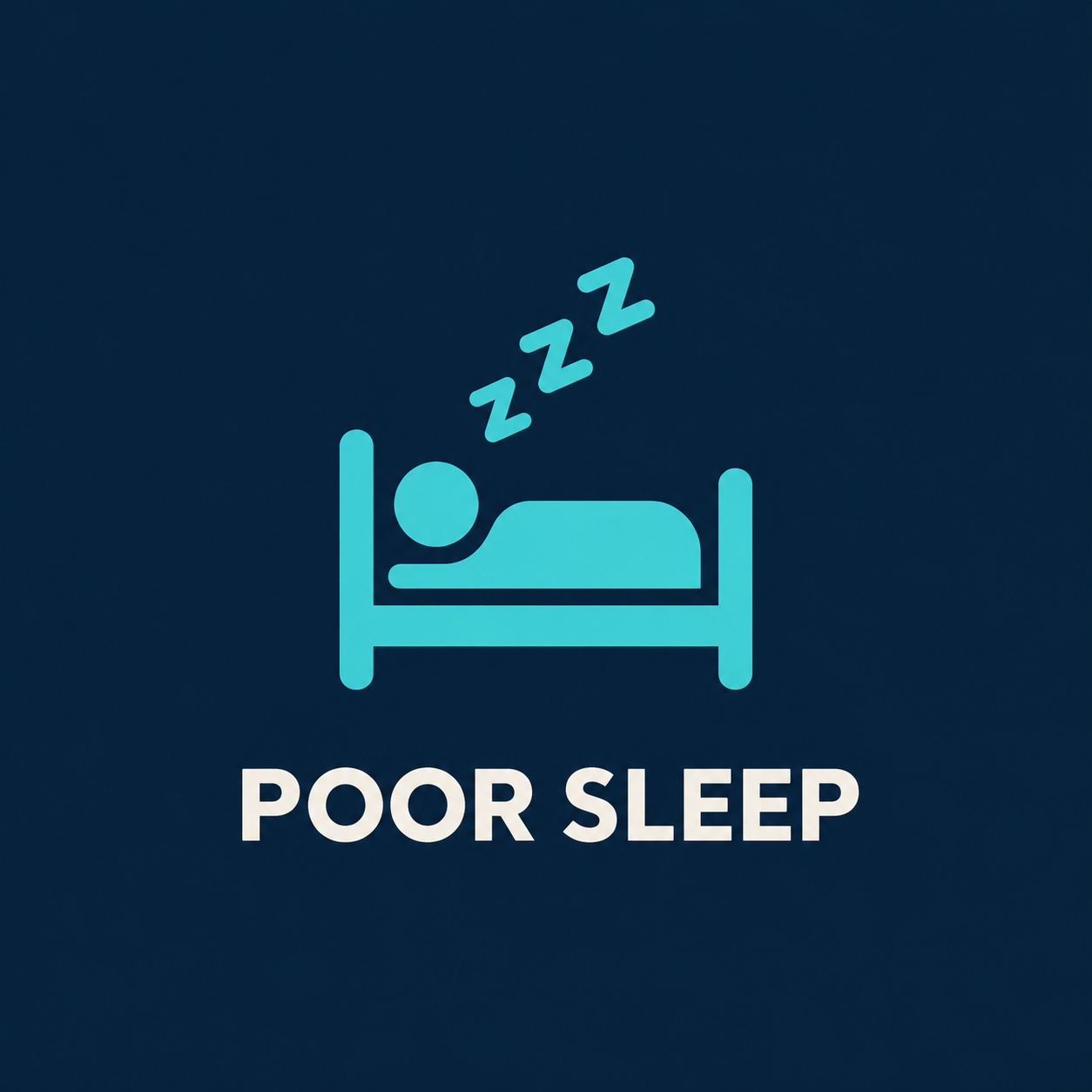
2. Poor sleep
- Hard to switch off at night, the mind keeps going
- Waking at 2 or 3 AM and unable to fall back asleep
- Light sleep, woken by small sounds
- Frequent tossing, turning or awakenings at night
- Waking up with a heavy head or racing mind
3. Digestive issues
- Bloating that builds through the day
- Gas or cramps
- Urgency that's hard to control, or leaks
- Constipation, loose stools, or switching between both
- Foods you used to handle now cause trouble
- Constantly thinking about your gut

4. Brain fog
- Hard to focus, rereading the same line
- Often forgetting words, your phone or keys, names, or why you walked into a room
- Many thoughts at once, unable to feel still or at peace
- Feeling groggy or slow
- Overwhelmed by small decisions
- Low mood
5. Plus one: stress held in the body
- A pit in your stomach before stressful moments
- Jaw clenching or teeth grinding
- Tight neck and shoulders running down the back
- Heaviness in the head or frequent headaches
- Getting triggered or irritated easily
- Overloaded by noise or people, wanting to be left alone
- Craving sugar or salt under stress
- Bouncing your leg or fidgeting without noticing
New, persistent, or worsening symptoms need a doctor's check.
SOUND FAMILIAR?
Everyone has an answer. None of them agree.
Your doctor Instagram Functional practitioners Holistic and energy healers Friends and family
Your doctor says one thing. Instagram says another. A functional or holistic practitioner orders more tests, a natural or energy healer suggests something else, and a friend swears by a supplement. Cut gluten. Eat more fiber. Try keto. Take this probiotic, avoid that one.
Each of them may be partly right. What's missing is a way to fit them together. So you keep switching, and each new thing helps for a while and then stops.
This session gives you that frame: where medical care fits, where diet and supplements fit, and where the pattern underneath fits. You leave knowing what to keep, what to drop, and what to ask your own doctor.
By the end of the hour
You will have a clear way to approach it
Not another protocol. One way of thinking you can apply to your own health, or to a parent, partner or friend you are helping through it.
The 5 steps we walk through
-
Acute or chronic.
Why a long-running problem needs a different way of thinking than a short-term one.
-
The microbiome pattern.
How chronic symptoms and diagnoses that look separate can be part of one connected microbiome pattern.
-
What shapes the microbiome pattern.
How the state your nervous system lives in, day after day, influences your gut microbiome, digestion and body chemistry, and why that connection is so often overlooked.
-
Why results don't last.
What diet, supplements and medical treatment do well, what they may not reach, and why a symptom-by-symptom approach can leave the pattern underneath unchanged.
-
Conscious regulation.
What it is, how it works on the nervous system and microbiome pattern, why it is different from meditation, and a short guided experience with me live.
-
Then I stay on for your questions.
WHAT PEOPLE SAY
From people who have been through it, and doctors who have seen it
"I was struggling with digestive issues and worrying too much. My digestion has improved a lot, and I feel much calmer now. I'm still working on managing my racing thoughts. I would definitely take the course again!"
Kornelia, current program participant
"I loved that there is hope for me that doesn't involve expensive supplements and testing that my insurance does not cover."
Monica, webinar attendee
"Impressive research and beautifully presented for everyone to understand. I'll be recommending this to my patients with chronic illnesses."
Dr Rut D., Neurologist
"Dr Shah's approach to nervous system work offers real value for both patients and clinicians. I'll be recommending this to healthcare professionals as well as patients."
Dr Noman Salih, Nephrologist
Individual experiences vary.
NICE TO MEET YOU
I'm Dr Neal Shah
Neal Shah, MD, is a Harvard-trained nephrologist, board certified in Internal Medicine and Nephrology, and a former Assistant Professor of Medicine at Johns Hopkins.
Why a kidney doctor talks about the gut, liver, thyroid and joints
Kidney medicine never sees one organ alone. My patients came with diabetes, high blood pressure, heart disease, gut trouble and low mood, often all at once, each managed by a different specialist. Many had years of fatigue, poor sleep and digestive problems before any diagnosis. That pattern led me to the gut microbiome, and to publishing research on it in the Clinical Journal of the American Society of Nephrology and Kidney360.
Then it became personal
For years I was a doctor who couldn't fix his own body: reflux, brain fog, fatigue, fatty liver, and then an autoimmune gut inflammation during my Harvard fellowship. Medicine kept me safe. Diets and probiotics helped for a while, then faded. What changed things was working on the pattern underneath, alongside my medical care. Seven years later, I'm off all medications, with no recurrence.
What I do, and what I don't
I don't treat diseases in this session. Your doctors and specialists do that, and that care stays in place. I teach the common pattern that often sits underneath chronic conditions, the part that falls between specialties. I'll tell you where the science is settled and where it is my own read.
Harvard-trained nephrologist
Board certified in Internal Medicine and Nephrology
Former Johns Hopkins faculty
Published microbiome researcher


"Nothing in my training explained why my symptoms kept coming back. Finding out took me years, and handing people that starting point instead of leaving them to find it themselves is why I share this now."
- Dr Neal Shah, MD
FREE LIVE SESSION · SUNDAY, NOVEMBER 15
Save your free spot
10:00 AM ET · 3:00 PM UK · 8:30 PM IST · Live on Zoom
Your Zoom link arrives by email. Live only, so please save the time.
Your phone number is optional. It is used only for SMS or WhatsApp reminders about this session.
Questions people ask
Who is this for?
What actually happens in the session?
Is this meditation?
Is there a recording?
I have already tried a lot of things. Why would this be different?
Are there things this does not help with?
I am on medication. Is this suitable?
Will I need to buy supplements or follow a special diet?
Do I need to have my camera on?
Is there anything for sale?
The information provided in this content is for informational and educational purposes. It is not intended to substitute for professional medical advice, diagnosis, or treatment, and it does not create a doctor-patient relationship. Please consult your primary care physician or another medical professional before making changes to your diet, exercise routine, medical regimen, lifestyle, or mental health care.